

Sales begins with quality information and ends with excellent service. – H Mikel Feilen
The contents below take you to a password protected library.
Table of Contents
🧭 The Purpose of Sales Procedures – Structure with Integrity
Sales procedures aren’t scripts to memorize—they’re structured outlines designed to guide your thinking. Each point in the progression of a sales conversation should serve a clear, logical purpose. When used correctly, these procedures help instructors communicate with confidence, clarity, and professionalism.
What They Are Not:
They’re not about pressuring people into buy your product.
They’re not about tricky, emotional, persuasion selling.
Simply put, they’re not about convincing someone to buy something they don’t want.
The truth is simple:
If someone called your studio, it’s because they want to learn how to dance.
Your role as an instructor is to answer their questions, provide clarity, and help them see what’s possible.
Most new students don’t know what to expect on their first lesson. Yet, they do have two unspoken questions when they walk in that you must answer:
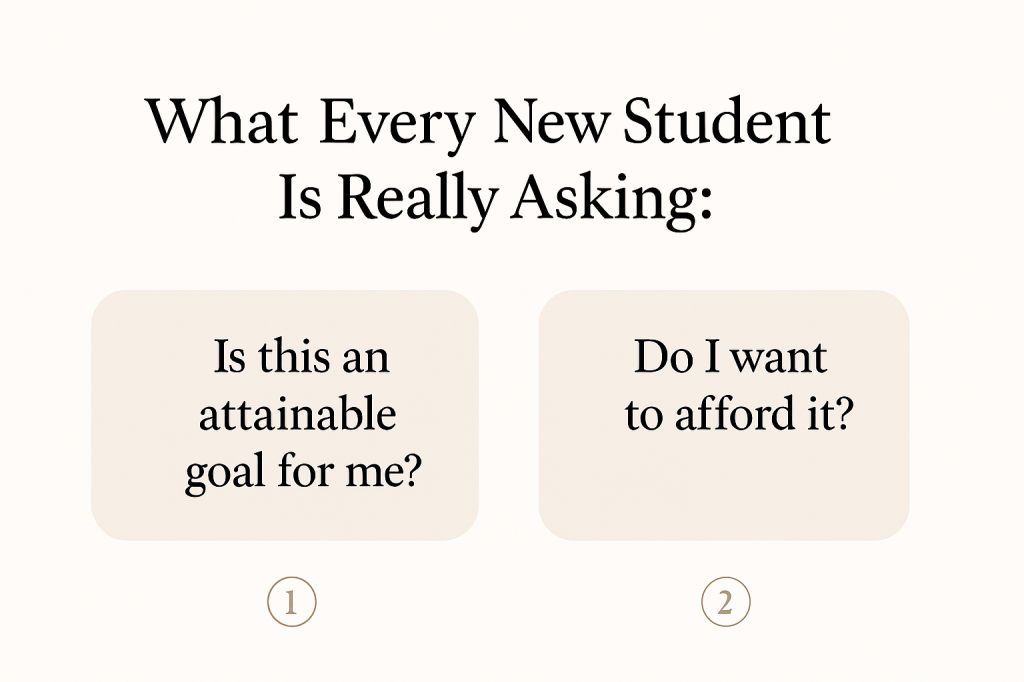
Notice—it’s not “Can I afford it?” but rather do I want to afford it. Which brings us back to the first question.
If someone has taken the time to book a lesson and show up for it, they’ve already decided they can afford something. The real question is whether they believe the experience is worth investing in.
That’s why the first question, “Is this an attainable goal for me?” is the most important. It must be answered convincingly before the second question even matters.
🎯 The Introductory Offer Procedure
There is a mental progression we all go through when being introduced to learning something new. Understanding that process is crucial if you want your new student to have great first impression of your studio and a fabulous time enjoying your product.
This is what a great Introductory Offer procedure can do. The Amazing Dance Solutions’ method of selling is a logical progression, that is entertaining, and easy to follow.
The procedure is broken down into Points and Purposes; making it simple to learn, remember, and personalize. When you follow the mocks during training, it becomes second nature to use your own words later—without losing the flow or intent.
Being able to explain your product clearly and confidently makes you appear more knowledgeable, more professional, and more trustworthy.
Once you understand the structure behind our Amazing Introductory Offer, you’ll see why it works so effortlessly—and why it builds trust from the very first conversation.
The Introductory Offer

✅ The Planning Program – Let Them Fall in Love with Dancing
This powerful sales approach is designed to do one thing:
Help new students feel confident they’ve made the right decision.
Rather than pushing a commitment too early, the Planning Program Procedure gives students space to discover the joy of dancing for themselves. It allows them to:
- Experience how fun and fulfilling learning to dance can be
- See real progress—proving to themselves that dancing is an attainable, exciting goal
- Reassure themselves that they’ve made a smart, pressure-free investment
Here’s the key:
We temporarily remove the financial decision from the conversation.
Instead of thinking “How much will they spend?”, we ask:
“How do you want to experience your dancing—through private lessons, group classes, or both?”
You are the order taker of the dance experience they want. By shifting the focus from cost to experience, we empower students to choose their path with clarity and enthusiasm.
It’s not about selling dance—it’s about letting them fall in love with it.
Planning Program Sales Procedure

The Extension Procedure—Reimagined for Smart Growth
In the past, the Extension Procedure was often used to enroll students onto large blocks of lessons. While this created short-term security for studios, it also introduced long-term financial liability—something many business owners would overlook.
However, here’s the truth:
The more prepaid lessons a studio carries on its books, the more liability it holds—and the less the business is worth.
A healthy studio isn’t just about how many lessons are sold—it’s about the ratio of lessons used each week versus lessons owed. That balance is critical for any owner who takes their business valuation seriously.
So how do we use the Extension Procedure today?
We apply it strategically—to promote short-term, high-impact programs with built-in expiration.
Example:
- Showcase routines
- Group or team classes & performances
- Seasonal events with a defined delivery window
These are ideal uses of the Extension Procedure because the liability is fulfilled quickly, and the student’s excitement stays high.
This procedure plants the seed for future growth—introducing beginner-level routines that accelerate learning, build confidence, and open the door to showcases and competitions.
Ready to see how it works in your studio?
Get Started at the ADS Library (password protected)
Extension Sales Procedure

🔄 The Renewal Procedure –
Keeping Students Engaged, Aligned, and Moving Forward
A Renewal occurs when a student is nearing the end of their current lesson package. It’s a pivotal moment—not just for sales, but for deepening trust and reaffirming the student’s commitment to their dance journey.
There are three distinct types of Renewal Procedures, each with its own tone, purpose, and approach:
1. ✅ No-Change Renewal
The student is happy and progressing.
They simply need to purchase another block of lessons to continue their current path.
Objective:
- Maintain momentum
- Reinforce their progress
- Make the renewal feel seamless and affirming
2. 🎯 Goal-Change Renewal
The student’s goals have evolved.
They may now want to compete, train as an instructor, or pursue a more advanced track.
Objective:
- Acknowledge and celebrate the shift in ambition
- Reframe the lesson plan to match their new goals
- Offer a package that supports their elevated commitment
3. 🛑 Save Renewal
The student is considering quitting.
This is a critical moment to listen, understand, and respond with care—not pressure.
Objective:
- Discover the “why” behind their decision (remember, what they say is the reason may not be the truth)
- Try to reconnect them to their original motivation
- Offer a tailored solution (short-term plan, new goal, or schedule adjustment) that reignites their interest
- This part of the procedure is vital – stay or go it is always better to keep good relations with past students as well as the present student body
- If they did stop taking lessons and they left without being pressured, there would be no awkwardness if they decided to return
Why It Matters:
Renewals aren’t just transactions—they’re trust checkpoints.
Handled well, they deepen loyalty, increase student body retention, and turn casual students into lifelong dancers.
Easy to follow, click below
Renewal

🎭 Selling Showcase & Competition Packages
A Strategic Approach to High-Value Dance Experiences
Selling a Showcase or Competition package isn’t about pressure—it’s about presenting exciting opportunities that align with the student’s goals and the studio’s long-term success. Both options offer value, but they serve different purposes from a business perspective.
🏆 Competition Packages
High Prestige, Lower Profitability (for the Studio)
Students often spend thousands preparing for competitions—on costumes, shoes, accessories, travel, and entry fees. But most of that money goes to outside vendors and competition organizers.
What the studio earns:
- Lesson packages leading up to the event
- Instructor compensation (per heat, daily pay, and potential Top Teacher awards)
What the student sees:
- A large overall investment
- A sense of pride and achievement—but not a breakdown of where the money went
Ideal for:
- Advanced instructors with a few high-performing students
- Studios looking to build prestige and visibility in the competitive circuit
🌟 Showcase Packages
High Engagement, High Profitability (for the Studio)
Showcases are studio-produced events that offer students a chance to perform in a supportive, celebratory environment. Unlike competitions, the studio controls the experience—and the revenue.
What the studio earns:
- Lesson packages
- Choreography fees
- Event tickets
- Video/photo packages
- Merchandise or upsells
What the student sees:
- A meaningful, memorable experience
- A clear connection between their investment and the studio’s value
Ideal for:
- Students of all levels
- Studios looking to generate revenue, build community, and create buzz
💡 Owner’s Perspective:
“When students reflect on how much they’ve spent on dancing, they don’t break it down by vendor—they just know it was a lot. That’s why I prefer selling showcases. They create lasting memories and real revenue for the studio.”
🎭 Showcase vs. Competition Packages
| Aspect | Showcase Packages | Competition Packages |
|---|---|---|
| Revenue to Studio | High – studio controls all aspects: lessons, choreography, tickets, media, upsells | Limited – most revenue goes to competition promoters and vendors |
| Student Investment | Moderate – focused on lessons and event participation | High – includes travel, costumes, shoes, entry fees, and more |
| Studio Control | Full – studio produces and profits from the entire experience | Minimal – only over non-comp itinerary, but event is externally managed |
| Instructor Compensation | Routine Lessons, Choreography fees, Showcase bonuses from event success | Per heat pay, daily rate, potential Top Teacher awards |
| Student Experience | Supportive, celebratory, community-focused | Competitive, high-pressure, prestige-driven, get to watch the best dancers in the country – Exciting! |
| Ideal For | All student levels – especially beginners and social dancers | Advanced students with competitive goals |
| Business Value | High – builds community, customer retention, and studio brand | Strategic – builds prestige, an exciting service, yet less direct financial return |
| Owner’s Perspective | “A real money-making event that strengthens our studio culture.” | “Great for visibility, but the financial return is limited to lesson prep.” |
Showcase & Competition Sales Procedures
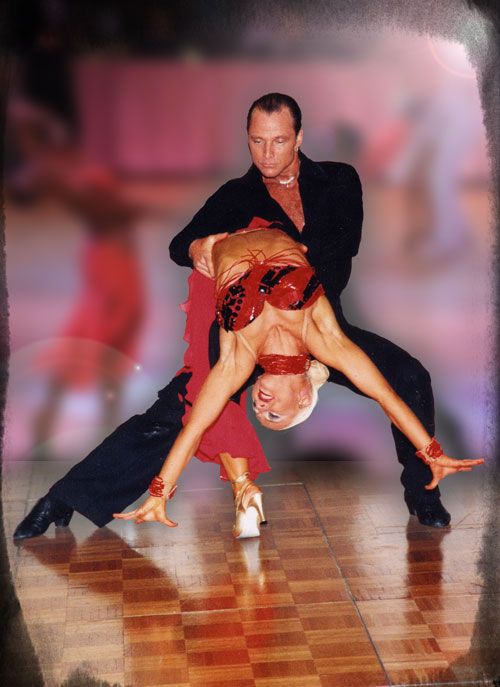
Bob Powers and Julia Gorchakova, who performed at our, For the Love of Dance Showcase production, at the Atlantis Resort Spa and Casino in Reno, Nevada, 2008.
 Amazing Dance Solutions