From rise and fall to Latin motion, we create movement to define what we hear
If you think about it, a dance must follow the music. People weren’t dancing around 1, 2, 3, when Chopin said, “I think I’ll write a song to fit that special type of movement. I’ll call it the Waltz.”
The Waltz, Rumba, Tango, Samba, Paso Doble, and all other dances were developed after the music that inspired them.
This is why I don’t have a specific favorite dance. It all depends on the song I’m dancing to. If it’s a Foxtrot, that’s fantastic, but if the music calls for an amazing Tango or Cha Cha, then that’s perfect too — they’re all my favorites.
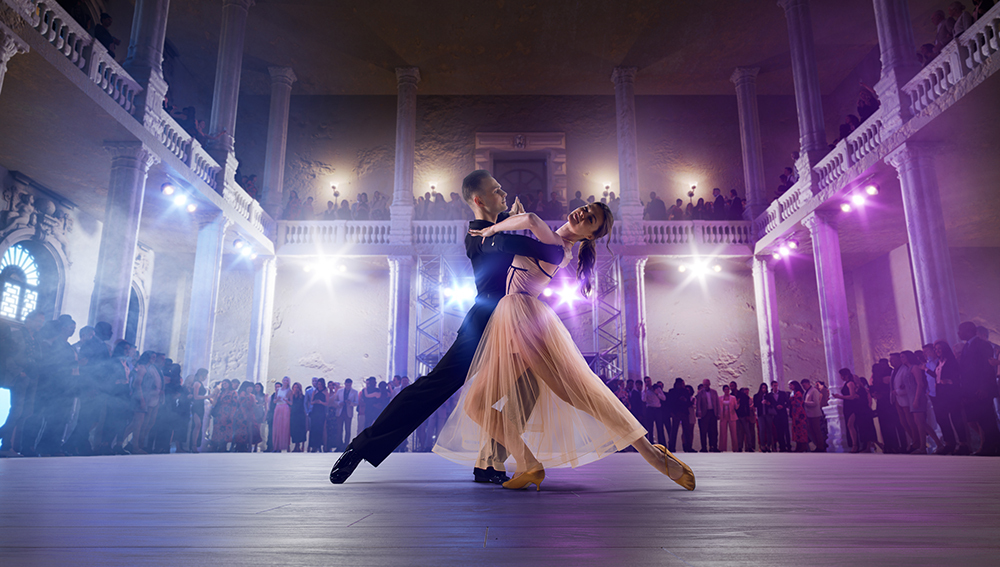
The video above showcases a beautiful example of the Slow Waltz. Dances are often defined by their unique characteristics, and the Waltz stands out with its 3/4 time, rise and fall, and graceful sway. It’s one of the most elegant dances, with its faster counterpart, the Viennese Waltz, adding a lively touch. The Waltz is also the oldest ballroom dance still enjoyed today.
Here is an example of the Viennese Waltz in the American style, which contrasts with the International Ballroom style where couples remain in dance position throughout. In the featured exhibition video, the dancers stay in close hold. However, in American Smooth, dancers have the freedom to break away and perform more open movements.
Rhythm dances like the Rumba, Cha-Cha, and Mambo feature a hip movement called Cuban Motion. All three dances come from Cuba and were originally performed on sandy beaches.
This is why we push our foot, toes first, across the floor, much like walking through sand. It creates a sensual hip motion and gives these dances their unique flair.
The couple below are amazing world champion dancers, and their Cha Cha is sizzling! Watch and enjoy as the dances get even faster.
Every dance has unique characteristics that define it, all of which were created to express the music. The music came first, and the dances followed.
New dances are constantly being created, while older ones are being reimagined and refined. This is what makes dance so amazing—it’s always growing and shifting as music evolves and transforms.
I hope you found this article enjoyable. It’s not often we consider the sequence in which dance and music intertwine.
 Amazing Dance Solutions
Thank you, for commenting! I am always eager to hear what you have to say.